Edmonton West Animal Hospital & Spay/Neuter Centre
Recovery Guide

TPLO Rehabilitation Guide

A practical recovery plan for dogs after TPLO surgery - confinement, phased exercises, and long-term joint care.

16+

Week Plan

Phased

Exercises

Vet

Guided

TPLO Recovery

Dog TPLO Rehabilitation in Edmonton

Your dog must stay confined during recovery. A kennel or crate works best, large enough to stand up and turn around in. Alternatively, confine your dog to a small room like the kitchen using baby gates. If the flooring is tile, laminate, or another slick surface, place yoga mats or rubber-backed area rugs down for better traction. A "belly band" - a towel looped under your dog's abdomen can provide support while walking.

Do not allow jumping of any kind, on furniture or on people, and avoid play with other pets in the household until your veterinarian confirms rehabilitation is complete. Since activity is limited during this period, reduce your dog's food intake to help prevent weight gain. If your dog is on pain medication, performing exercises about 30 minutes after a dose when your dog is most comfortable tends to work best.

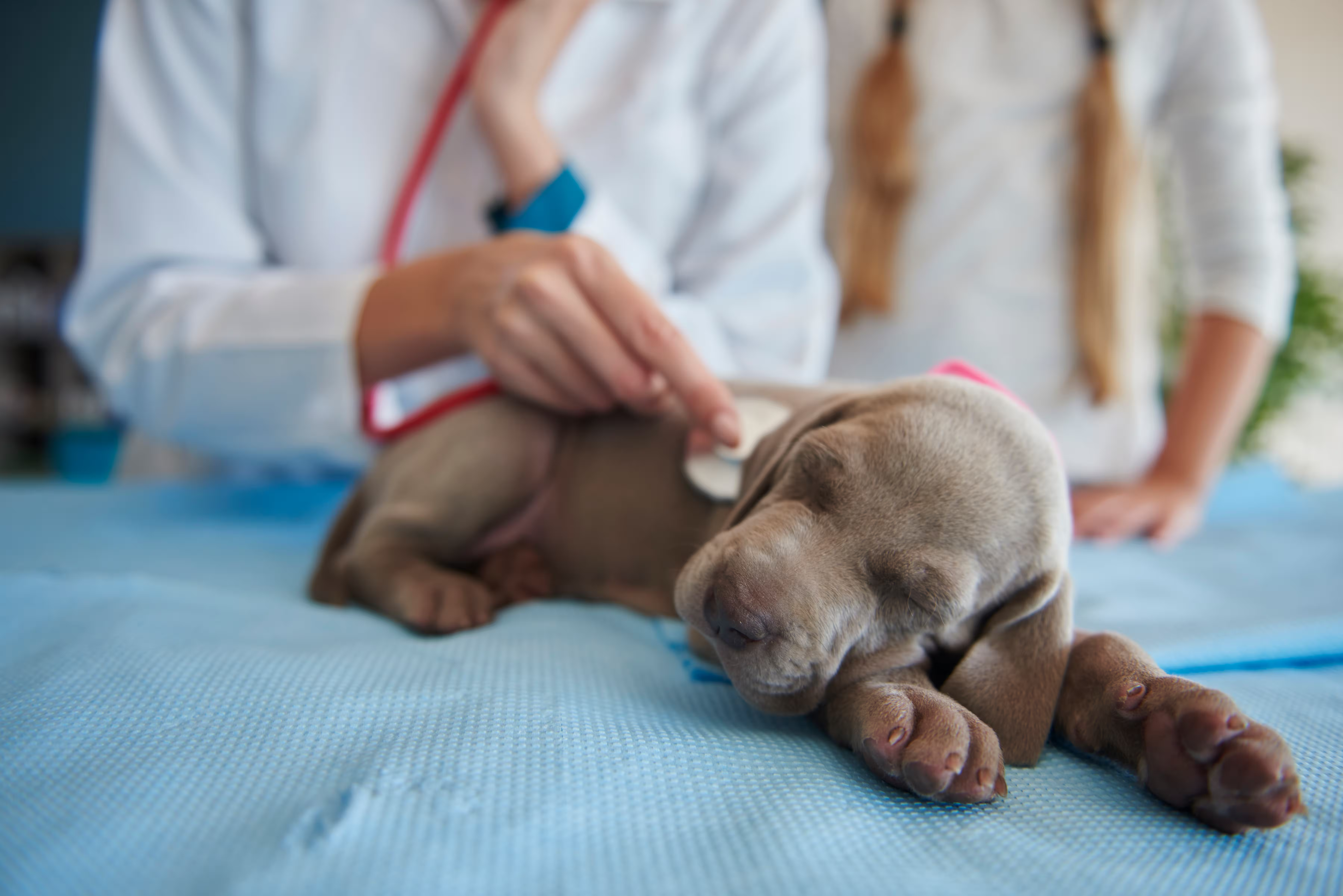
Veterinary team supporting pet recovery after TPLO surgery
Recovery Plan

Rehabilitation Schedule

1

Weeks 0-2

Once the bandage is removed, gentle exercises can begin:

Warm packs

Apply before working the limb, to encourage blood flow (only if the leg isn't already warm or inflamed). Test temperature on your own skin first, and always place a towel between the pack and your dog's skin. 5-10 minutes per session.

Passive range of motion (PROM) and massage

Massage the muscles of the affected limb firmly (not a light petting motion). All four limbs can be massaged, since the uninjured legs are compensating for the surgical leg. For PROM, have your dog lie on their side with the affected leg up; support the leg with one hand while gently bending and straightening it with the other. 10-15 minutes, several times daily.

Slow, controlled leash walks

In the first few days, walks should be brief bathroom breaks only, always on leash. Avoid stairs except 2-3 steps if necessary, supported with a belly band. By the end of week one, walks can increase to 5 minutes. Keep the pace slow to encourage use of the affected leg, and avoid icy, slippery, hilly, or uneven surfaces. Up to 3 times daily if tolerated.

Ice packs

Apply after exercise to reduce pain and inflammation. Frozen gel packs, bags of frozen peas, or crushed ice all work - always with a towel between the pack and the skin. 10-15 minutes per session.

2

Weeks 2-8

Leash walks

Increase to 10 minutes, 3 times daily, still at a slow, controlled pace. You can introduce variety - figure-8 patterns, curbs, small obstacles, long grass, or snow. Once sutures are removed, wading through shallow water can help build strength through resistance while reducing joint stress (not advisable if your dog would try to run or play in the water). Keep your dog on a short leash at all times.

PROM can be discontinued, but continue massaging the hind leg muscles and applying ice after exercise.

3

Weeks 8-16

Leash walks

Increase to 20 minutes, 3 times daily, at a moderate pace. Vary terrain to include hills or ramps. Stairs can be attempted slowly and carefully, no more than 5-10 flights, twice daily.

Sit-to-stand exercises

Have your dog sit squarely, then stand, to build strength in the repaired leg. To prevent "cheating" (sitting lopsided or pushing off the healthy leg), position your dog next to a wall with the affected leg against it. 10 repetitions, 3 times daily.

Swimming

Light swimming is a good overall workout during this period of limited activity, if desired.

Three-legged standing

Have your dog stand, then gently lift one of the uninjured legs for 5-10 seconds at a time, to increase weight-bearing on the surgical leg.

4

Week 16+

Leash walks

Speed and duration can increase based on tolerance. Cut a walk short if limping or fatigue appears. Short, straight runs (no turns) can be introduced.

Sit-to-stand exercises

Increase to 20-30 repetitions, 3 times daily.

Gradual return to normal activity

Once your veterinarian confirms healing is complete, short bouts of off-leash activity can begin. Rebuilding muscle mass takes more than twice as long as losing it, so even once the bone has healed, full strength can take months to return. Patience is key, and activity should increase gradually. A significant number of dogs, commonly cited at around 1 in 3, will go on to injure the ligament in their other leg. Keeping your dog fit, lean, and healthy can help reduce this risk.

Source: PMC340307

Long-Term Recommendations

Maintain a healthy weight

Overweight dogs have shorter overall lifespans and a much higher incidence of osteoarthritis. Keeping your dog lean is the single most effective way to support long-term health and quality of life.

Joint-supportive nutraceuticals

Ask your veterinarian about joint supplements, prescription diets, or osteoarthritis injections, which can help preserve cartilage and support joint mobility, lubrication, and shock absorption.

Resources

Contact

Download the PDF version of this guide (Adobe Reader required - Adobe Reader).

We're excited to welcome new clients! Walk-ins and emergencies are accepted during regular business hours. For emergencies, please call ahead so we can be ready to assist your pet promptly.

Questions About TPLO Recovery?

Our team is here to support you through every stage of your dog's rehabilitation.