Open 7 Days a WeekEmergency: (780) 488-0124

Bad breath is often the first sign of dental disease. Up to 85% of dogs show some degree of periodontal disease by age 2.
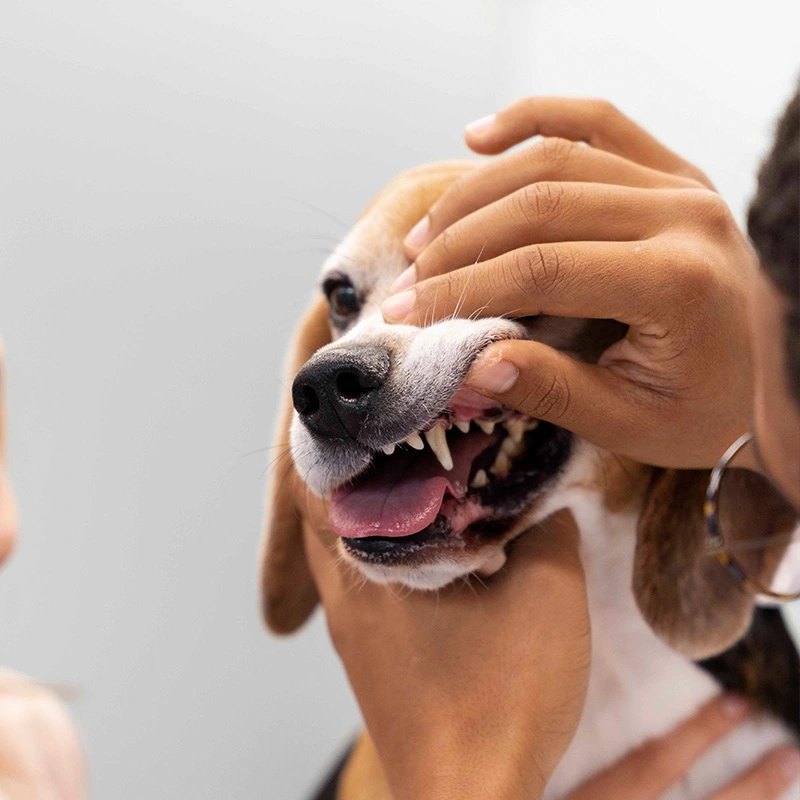
Oral hygiene is a major health issue for dogs, and bad breath is often the very first sign something's wrong. Up to 85% of dogs show some degree of periodontal disease by age 2.
7 Days
Emergency care
Canines
Health guide
Call
If symptoms persist
Oral hygiene is a major health issue for dogs, and bad breath is often the very first sign something's wrong. Up to 85% of dogs show some degree of periodontal disease by age 2.
Periodontal disease begins with plaque building up on the teeth. Left alone, plaque hardens into tartar, which leads to sensitive, sore, swollen gums and gingivitis - the visible signs of advanced dental disease. But it doesn't stop at the gumline: dental disease has been linked to problems in other organs, including the heart and kidneys, and can shorten a dog's life if left untreated.
Breed plays a real role. Smaller dog breeds tend to develop dental problems earlier than larger breeds, largely because their teeth are proportionally larger relative to their jaws, leading to crowding. As for diet type, the idea that dry kibble alone meaningfully prevents tartar has largely been set aside. Most kibble is swallowed with minimal chewing, so it doesn't provide the mechanical cleaning effect once assumed. Neither dry nor canned food, on its own, makes a significant difference in preventing dental disease.
If your dog already shows signs of dental disease like loose teeth, swollen gums, or oral infection, a professional cleaning under general anesthesia is usually necessary. This is the only way to thoroughly clean below the gumline, where most disease activity actually happens, and it lets your veterinarian safely address any extractions or other treatment your dog's mouth needs.
Major veterinary organizations, including the AVMA and AAHA, advise against feeding raw or undercooked animal proteins due to pathogen risk to both pets and people. More importantly for dental health specifically, chewing on hard bones is a well-documented cause of fractured teeth in dogs, and veterinary dental specialists recommend avoiding bones, antlers, hooves, and other hard chews for this reason.
Daily brushing
Daily brushing is the single most effective thing you can do, and it's most successful when you start while your dog is young and gets used to the routine early.
VOHC-accepted dental chews
Dental chews and treats carrying the Veterinary Oral Health Council (VOHC) seal of acceptance are formulated and tested to reduce plaque and tartar without the fracture risk of bones or antlers. Look for chews that give slightly under pressure - anything too hard for you to press a thumbnail into is too hard for your dog's teeth.
Water additives and rinses
Water additives and dental rinses can help with breath and plaque, though it's worth avoiding any product containing alcohol.
Regular veterinary checkups
Regular veterinary checkups let your vet catch early dental disease before it progresses, and a professional cleaning is sometimes the necessary next step even with good home care.
Dental Care
Call (780) 488-0124 or book an appointment. Our team can diagnose, treat, and guide you through your pet's care.