Open 7 Days a WeekEmergency: (780) 488-0124

Cartilage cushions the bones in a joint so they can glide without pain. When that cartilage is damaged, arthritis develops and the joint becomes inflamed and painful.
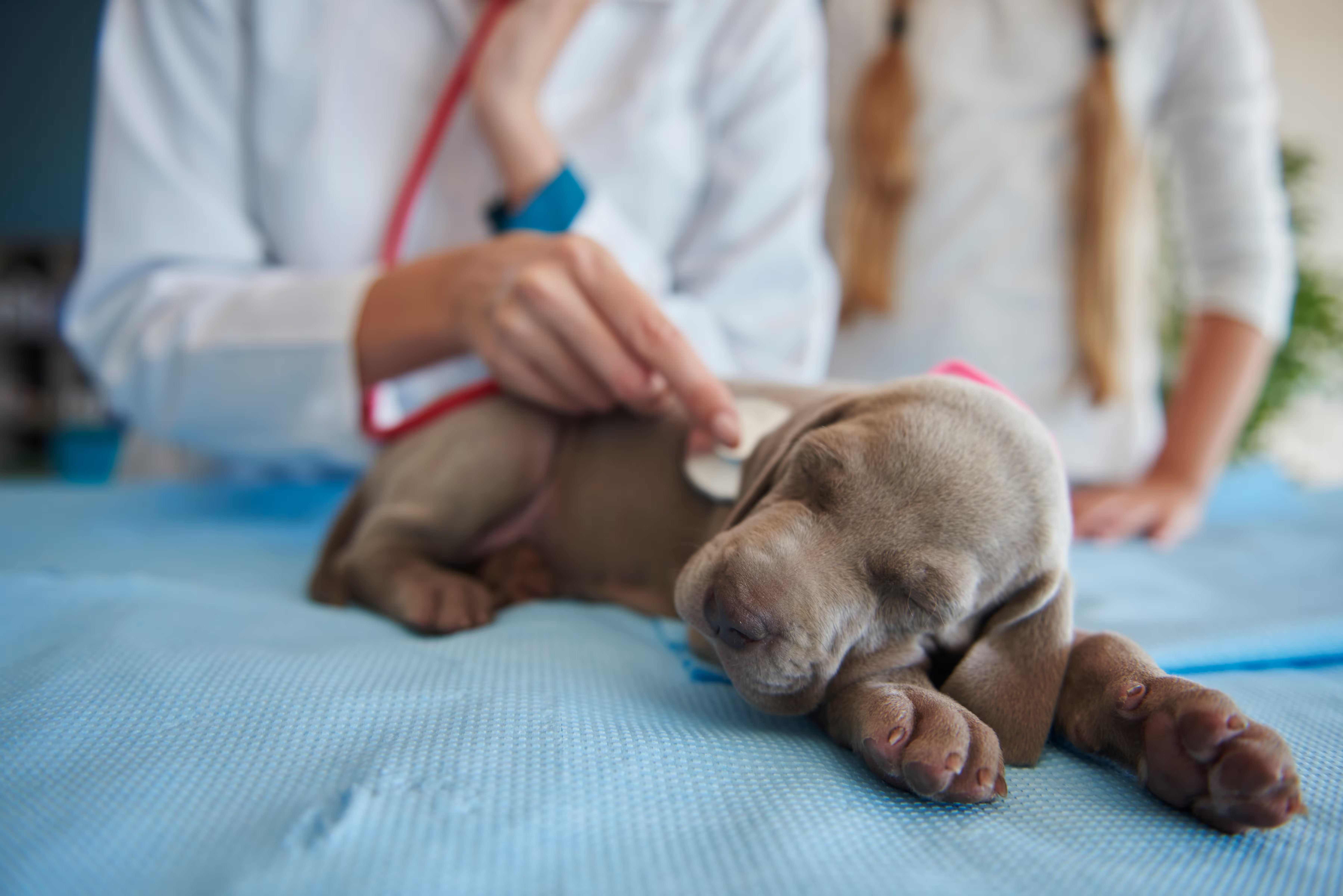
Cartilage acts like a cushion between the bones in a joint, letting them glide past each other without pain.
7 Days
Emergency care
Canines
Health guide
Call
If symptoms persist
Cartilage acts like a cushion between the bones in a joint, letting them glide past each other without pain. Arthritis develops when that cartilage becomes damaged and the joint grows inflamed and painful as a result. There are over 100 recognized forms of arthritis in humans; in dogs, the most common by far is osteoarthritis, also known as degenerative joint disease. Less commonly, dogs can also develop rheumatoid arthritis or septic arthritis, caused by a joint infection.
Arthritis tends to affect middle-aged and older dogs most, though younger dogs aren't immune to it. Because the condition often develops gradually alongside normal aging, it's easy to write off early signs like a slight loss of playfulness as just "getting older," when your dog may actually be in significant pain.
Osteoarthritis
Osteoarthritis is the most common form, largely caused by everyday wear and tear on the joint, though it can also follow an injury. It begins with cartilage damage, which, left unaddressed, eventually leads to the bones themselves wearing against each other. What starts as mild discomfort during activity can progress into constant pain, even at rest. Osteoarthritis most often affects weight-bearing joints but can involve joints of any size, and unlike rheumatoid arthritis, it's primarily a condition of older dogs. There's no cure, but its progression can be slowed and managed. Physiotherapy that strengthens the surrounding muscles and joints can help, as can pain medication, and for some dogs, weight loss meaningfully reduces the load on affected joints.
Rheumatoid arthritis
Rheumatoid arthritis happens when the immune system mistakenly attacks the body's own tissue, not just in the joint, but more broadly throughout the body. This leads to damage in the joint lining and cartilage, and eventually erosion of the bones that meet at the joint. Corticosteroids are among the medications used to manage this condition.
Arthritis symptoms can be subtle early on, becoming more noticeable as joint pain progresses.
Limping
Favoring a limb, often more pronounced right after waking and easing somewhat with movement.
Reduced Mobility
Struggling to sit comfortably, hop into the car, or manage stairs.
Abnormal Posture
A hunched back, sore neck, or lameness in one or both hind legs if the spine is affected.
Reduced Activity
Shorter walks, more frequent napping.
Changes in Grooming
Licking, chewing, or biting at painful areas, leading to bald patches or irritated skin.
Changes in Temperament
Irritability, snapping, or vocalizing when touched in previously comfortable spots; it may help to adjust how and where you handle them.
Muscle Loss
Visibly thinner legs from reduced use.
Genetics
Larger breeds such as Labradors, Retrievers, German Shepherds, and Alaskan Malamutes carry a higher risk of hip dysplasia than smaller breeds.
Injury or Trauma
Fractures, dislocations, and other joint injuries can alter joint development and function, often leading to secondary osteoarthritis.
Obesity
No evidence it directly causes arthritis, but it can significantly worsen an existing case.
Arthritis affects roughly one in five adult dogs in the U.S., making it one of the most common sources of chronic pain veterinarians treat. The joints most often affected are the hips, elbows, shoulders, knees (stifles), wrists (carpi), ankles (hocks), and spine.
A veterinarian can diagnose arthritis through a physical exam, often supported by X-rays. In some cases, blood work or a sample of joint fluid may be needed to rule out infection as a cause.
There's no cure for arthritis, but there's a lot that can be done to keep an arthritic dog comfortable. The goal isn't to limit activity - it is to manage pain effectively. Treatment may start off more aggressive, especially if your dog has already become inactive, and often eases as the benefits of exercise and management take hold.
Exercise
Regular movement keeps the muscles, tendons, and ligaments around a joint strong; weakened supporting tissue tends to worsen arthritis symptoms. Exercise also stimulates joint fluid production, which lubricates and nourishes cartilage, and helps prevent weight gain that adds further strain to sore joints.
Medication
Nonsteroidal anti-inflammatory drugs (NSAIDs) and opioid-based medications are commonly used to manage arthritis pain in dogs.
Diet
A number of therapeutic diets and supplements are available, often formulated with essential fatty acids to reduce inflammation and glycosaminoglycans, the building blocks of cartilage.
Additional Options
Acupuncture and low-level laser therapy are also used by some veterinarians as part of an arthritis management plan.
Arthritis
Call (780) 488-0124 or book an appointment. Our team can diagnose, treat, and guide you through your pet's care.